Pictures 1974
Catalogue / Memoir
Introduction
Pictures
Objects
Animations
PICTURES are both finished and ephemeral works made for animations.
1949---- 1950---- 1951---- 1952---- 1953---- 1954---- 1955---- 1956---- 1957---- 1958---- 1959---- 1960---- 1961---- 1962---- 1963---- 1964---- 1965---- 1966---- 1967---- 1968---- 1969---- 1970---- 1971---- 1972---- 1973---- 1974---- 1975---- 1976---- 1977---- 1978---- 1979---- 1980---- 1981---- 1982---- 1983---- 1984---- 1985---- 1986---- 1987---- 1988---- 1989---- 1990---- 1991---- 1992---- 1993---- 1994---- 1995---- 1996---- 1997---- 1998---- 1999---- 2000---- 2001---- 2002---- 2003---- 2004---- 2005---- 2006---- 2007---- 2008---- 2009---- 2010---- 2011---- 2012---- 2013---- 2014---- 2015---- 2016---- 2017---- 2018---- 2019---- 2020---- 2021---- 2022---- 2023---- 2024---- 2025---- 2026----
Art runs away as soon as you call its name.
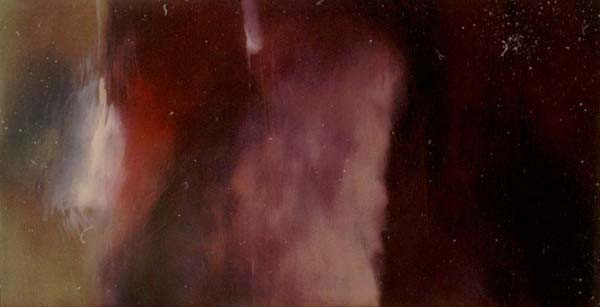
1974 Moora Moora Mist.
Acrylic on canvas.
James Goding collection, Melbourne
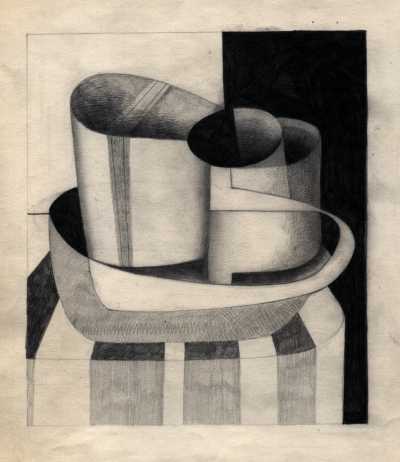
1974 Cups
Pencil on paper
Private collection, Melbourne
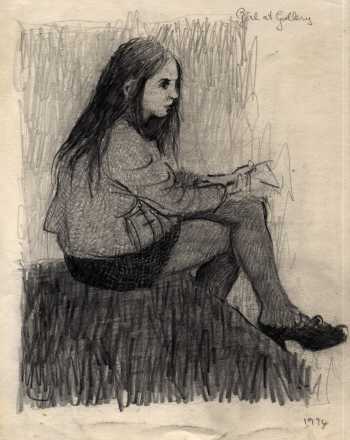
1974 Gallery girl.
Pencil on paper.
Private collection, Melbourne
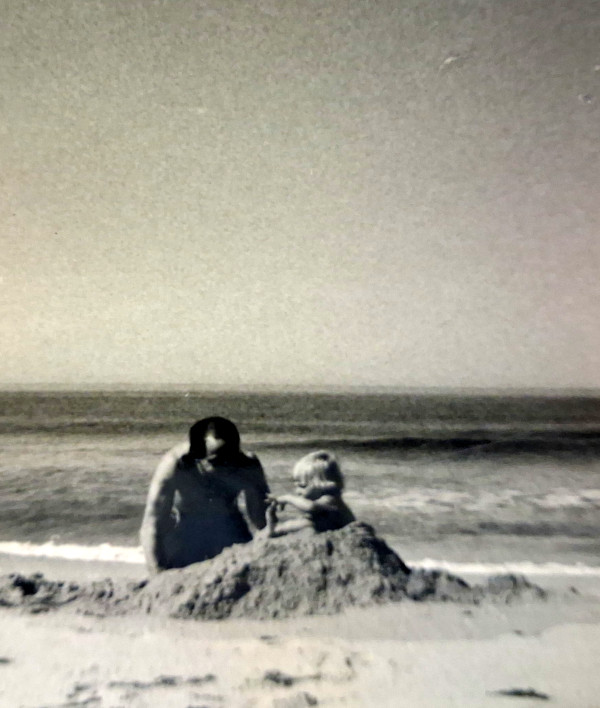
1974 James Clayden and Joe at Lake Tyers.
Photo. Artists collection, Sydney
Art bows to corporate interests.
American art critic and formalist aesthetician Clement Greenberg came to Australia and pitched his views on art and art education. To me and some teachers, and fellow students at the Victorian College of Arts, we resisted the seduction of art promoted as a lucrative fashion. We looked the other way. We valued our time upstairs in the National Gallery of Victoria's art state collection, to choose for our selves what made sense to us. I was looking at Chagall and loved how he showed everything in nature connected, with tones and shades transitioning, one into the other, with no lines, no hard edges, which was what Greenberg was promoting. I loved how Cezanne showed the world from different perspectives. I loved the genius of Rembrandt's and DaVinci's energy. One day, our teacher Alun Leech-Jones, a fan of Greenberg, walked past me and fellow student Ben Fennessy as we sat drawing each other and said in a derogatory manner, "Immortalising each other, are you?"
American author and journalist Tom Wolfe argues that
...these three critics [Greenberg, Harold Rosenberg, and Leo Stienberg] were dominating the world of art with their theories and that, unlike the world of literature in which anyone can buy a book, the art world was controlled by an insular circle of rich collectors, museums and critics with outsized influence."
Ref Wikipedia, accessed Tue June 9, 2026
https://en.wikipedia.org/wiki/Clement_Greenberg
Dubuffet complains that Levi-Strauss had become too theoretical.
There are too many cogitations on Theory... it is the malady of the epoch... Into the fire with Levi-Strauss and Michel Foucault!
Art runs away as soon as you call its name.
From Jean Dubuffet's letter to Jacques Berne,
22October 1970, p. 190
EVENTS
January 1974: A record strong monsoon gave an average rainfall over Australia of 231.69 millimetres (9.12 in), which beat the previous record by 105.11 millimetres (4.14 in), resulting in the heaviest flood of Lake Eyre for at least 500 years.
January 1974 is also the wettest month since before 1900 over the following sub-regions of Australia: Queensland with an average of 464.18 millimetres (18.27 in) (163 millimetres or 6.42 inches more than previous record from January 1918), the Northern Territory with 320.47 millimetres (12.62 in), the Murray-Darling Basin with 167.42 millimetres (6.59 in).
January 1974: Queen Elizabeth II creates five new knights in New South Wales and two in Queensland in her New Year Honours List. Chief Justice of New South Wales, Mr Justice Kerr, is made a Knight Commander of the Order of St Michael and St George. Broadcaster John Laws is appointed an OBE. Evonne Goolagong defeats Chris Evert to win the Australian women's singles title at Kooyong Stadium.
French President Pompidou reaffirms that France would continue to hold nuclear tests in the South Pacific. This draws an angry response from Australian unionists and the New Zealand Government. In Victoria Street, East Sydney, a 30-man team of workmen use sledgehammers and axes to batter down the doors of 19 houses occupied by squatters barricaded themselves in, protesting against the proposed development.
February 1974: High tides and heavy seas cause flooding and damage to homes and other buildings on the Queensland Gold and Sunshine Coasts and the New South Wales North Coast. Waves of up to 20 feet batter the coast as Cyclone Pam sweeps southward offshore. In Singapore, Prime Minister Gough Whitlam and Singapore Prime Minister Lee Kuan Yew bury their public feud and compliment each other on their policies. Lee praises the changes in Australia's immigration policy, assistance to Aborigines and aid to refugees from Bangladesh and Pakistan. 26 February - Mungo Man, a human skeleton estimated to be 40,000 years old, uncovered at Lake Mungo
May 1974: The 1974 Australian referendum is held simultaneously with the federal election. Referendum proposals on democratic elections (including one person one vote), simultaneous Senate and House elections, methods of altering the Constitution and local government received final overall votes of 46.8% Yes: 48.3% No. John Howard enters Parliament as an Opposition backbencher for the Division of Bennelong.
July1974: Australia's road signs switch from imperial to metric.
August 1974: Australia's first and only joint-sitting of the two houses of Federal Parliament takes place in Canberra.
December1974: Cyclone Tracy devastates the city of Darwin. The official death toll was 71.
Written by me, Lisa Roberts/Euphausia superba (Antarctic krill), on
6/12/2025