Pictures 1951
Catalogue / Memoir
Introduction
Pictures
Objects
Animations
PICTURES are both finished and ephemeral works made for animations.
1949---- 1950---- 1951---- 1952---- 1953---- 1954---- 1955---- 1956---- 1957---- 1958---- 1959---- 1960---- 1961---- 1962---- 1963---- 1964---- 1965---- 1966---- 1967---- 1968---- 1969---- 1970---- 1971---- 1972---- 1973---- 1974---- 1975---- 1976---- 1977---- 1978---- 1979---- 1980---- 1981---- 1982---- 1983---- 1984---- 1985---- 1986---- 1987---- 1988---- 1989---- 1990---- 1991---- 1992---- 1993---- 1994---- 1995---- 1996---- 1997---- 1998---- 1999---- 2000---- 2001---- 2002---- 2003---- 2004---- 2005---- 2006---- 2007---- 2008---- 2009---- 2010---- 2011---- 2012---- 2013---- 2014---- 2015---- 2016---- 2017---- 2018---- 2019---- 2020---- 2021---- 2022---- 2023---- 2024---- 2025---- 2026----
Grandma Norah calls me Lisa.
Her father calls her Foghorn
and does a mean thing.
This is a picture of Norah, my Cambridge English speaking grandmother. She was named after Nora in Ibsen's play, A Doll's House and would spell her name with and without an 'h' at the end. Her voice was piercing strong, loud and deep. Her father called her Foghorn. I find that mean since Nora's dream was to be an opera singer, and her father hid from her the letter of acceptance she was waiting on, to train at a prestigious singing school in London.
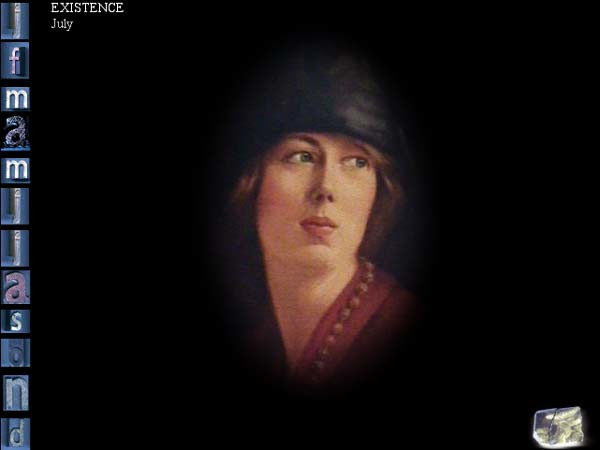
July Portrait: 'Nora Watson' c. 1921
Oil on board, 46.6cm x 37cm
Tom Roberts, c. 1921.
Digital image from Roget's Circular
Interactive CDROM (2001)
Co-authored with Melissa Smith
There was Nanna Phoebe and Grandma Nora: my mother's Australian Aboriginal Irish and Scottish mother Phoebe, and my father's Cambridge English speaking mother Nora.
I don't know who named Phoebe and I don't know much about her. Mum said she was taken from her Aboriginal mother Hanna Brown and raised by a white woman called Mrs Butler. Mum said Phoebe denied her Aboriginal ancestry, "or you'd get your head kicked in". So conversations with her about that were off the menu. Unlike my mother she was quite white. And conservative. She just wanted to fit in to ordinary white society. She would tell me to cross my legs like a lady when I sat.
Grandma Nora's mother was Louise. My father said Louise was a member of the Fabian Society and hosted meetings with George Bernard Shaw at their home in the grounds of the Royal Botanical Gardens in Kew, London. Louise's husband, the man who blocked Nora's singing career, was William Watson (1858-1925), a curator of the gardens and an Associate of the Linnean Society. The species Hebenstretia watsonii was named in his honour. Here is Louise with Leone, the nanny who helped look after Nora and her siblings, standing in the garden of their house in Kew:
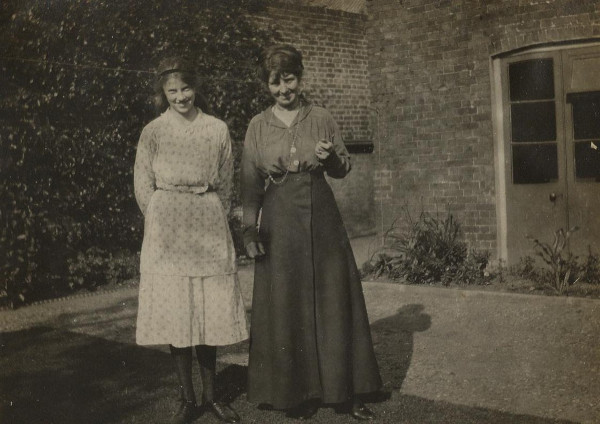
1850s. Great grandma Louise (right)
with her nurse Leone, in Kew, London.
When Nora came to visit us in Christchurch she insisted I be called 'Lisa' (with the 's' sounded as 'z'), the Russian way, she said. She disapproved of me being called Elyse, after Noel's French Tahitian lover. I called her Nora and I called my father Noel. Like my sister Nadya, I called our mother Mum because that's what Mum wanted. But Later I called her Jean because that's what Noel and everyone else called her.
There was conflict in my family on naming and many other things. I felt pressure to take sides. When my children were born Mum told me she wanted them to call her grandma. My children chose to call her Jean.
EVENTS
1951: A.N.Z.U.S., Australia's chief security alliance and the first important international alliance entered into by Australia, was formed with New Zealand and the United States..
Ref. The Australian Almanac, Pub. Angus & Robertson 1985
The Julius and Ethel Rosenberg espionage trial unfolds in the United States;
the Treaty of San Francisco ends World War II and restores Japan's sovereignty;
the nationalization of the Iranian oil industry under Mohammad Mosaddegh challenges Western influence;
the 1951 New Zealand waterfront dispute becomes a major labor conflict;
the 1951 eruption of Mount Lamington kills thousands;
The film, The King and I premieres to major acclaim;
UNIVAC I becomes the first U.S. commercial computer;
the 1951 Nepalese revolution ends Rana rule;
the Sakuragicho train fire kills over 100 passengers in Yokohama.
Ref. 1951 Wikipedia
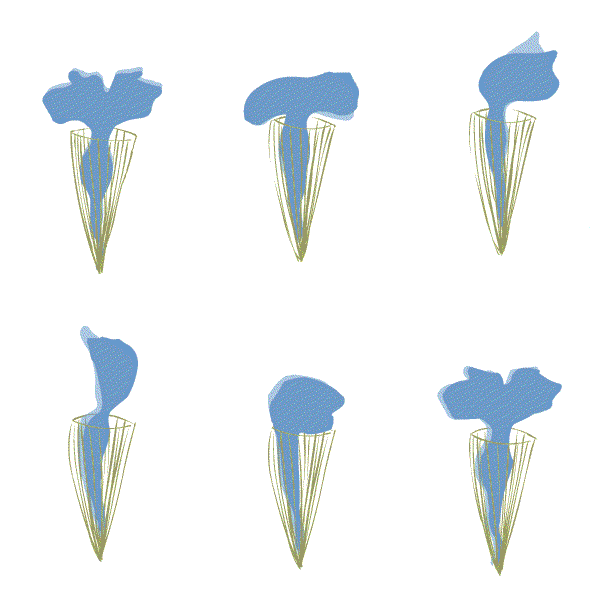
2004 Pteropod (winged foot)
Sea butterfly
Animation
Written by me, Lisa Roberts/Euphausia superba (Antarctic krill), on
17/04/2026